
How to Search Civil Dockets
Court level comes first in any Jefferson County civil docket search. Circuit Court holds general civil and domestic-relations matters. District Court holds limited civil, small claims, and unlawful detainer cases. Probate Court keeps estates, guardianships, conservatorships, adoptions, mental-health proceedings, and other statutory probate files. Next, decide Birmingham or Bessemer. Circuit and District records sit with separate clerks and counters in the two territorial divisions. For remote lookup, Alabama's Just One Look is the official paid service. It works case by case. It supports name and case-number searches. Alacourt.com offers subscriptions, and AlaFile handles filings and notices rather than public docket searching. Use this sequence:
- Identify Circuit, District, or Probate Court from the pleading, summons, or notice.
- Confirm Birmingham or Bessemer when a Circuit or District file is involved.
- Search by the complete case number when possible, preserving its punctuation.
- Read the chronology from complaint and service through judgment and later activity.
- Use Find My Courtroom only to check a Birmingham setting, then compare the direct notice.
- Contact the correct clerk for free inspection, an image, a plain copy, or certification.
Jefferson Civil Court Levels Compared
The word "civil" never points to a single Jefferson County civil court docket. Circuit and District Court split civil jurisdiction. Case type plus current law decide where a matter lands. Small claims and unlawful detainer stay in District Court. An appeal opens a Circuit file. Probate estates run through a different clerk on a different chronology. Landmark Web holds recorded property and marriage material. It cannot replace a Circuit or District case-action summary.
| Court | Civil matters | Search route |
|---|---|---|
| Circuit Court | General civil and domestic relations | Just One Look or division clerk |
| District Court | Limited civil, small claims, unlawful detainer | Just One Look or division clerk |
| Probate Court | Estates and statutory probate matters | Probate office and relevant probate index |
The official Circuit civil roster shows Jefferson County's general civil judges.
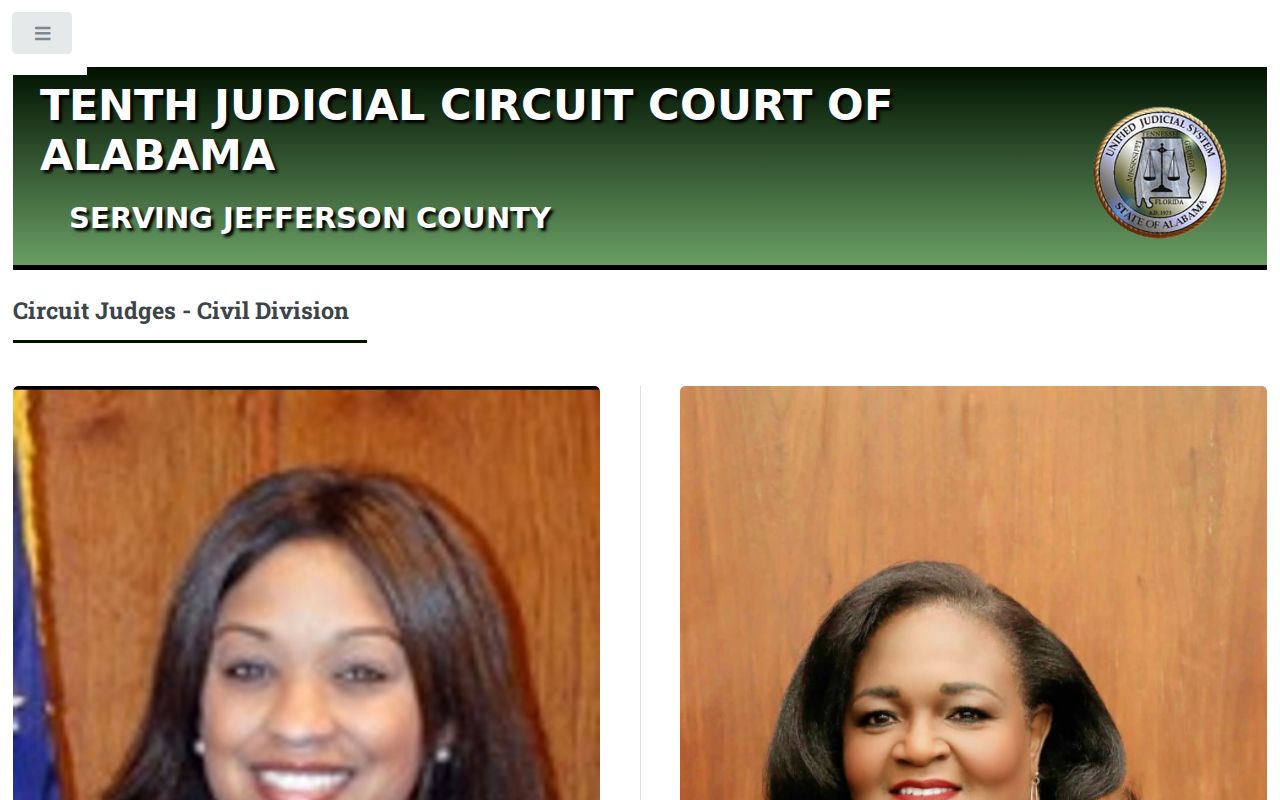
The assigned judge helps confirm a setting. Still, only the docket and the filed orders supply the case history and the judicial action behind it.
What a Civil Docket Shows
A Jefferson County civil docket header states the court, territorial division, case number, filing date, case type, judge, and status. Parties appear as plaintiff and defendant or petitioner and respondent, and public attorney information may sit beside each side. From there the chronology tracks pleadings, process, responses, motions, hearings, orders, judgment, and any enforcement or appeal activity.
| Complaint or Petition | The filing that starts the claim or asks for relief. |
|---|---|
| Service and Return | Issuance and the later record of delivery or nonservice. |
| Answer or Counterclaim | A response and any claim asserted back against another party. |
| Motion and Order | A request to the judge and the separate ruling on that request. |
| Setting | A conference, motion hearing, trial, or reset with date and court details. |
| Judgment | The relief granted or other precise outcome, followed by later review or enforcement entries. |
Links to filed documents may be paid, gated, redacted, or missing online. A docket is an index, not the full complaint, signed order, exhibit, or certified judgment.
Service Starts Jefferson Civil Chronology
A Jefferson County civil court docket tells its story in procedural order. Filing opens the case. The service return then shows whether process actually reached the defendant. Only after that does an answer, or a request for default, make sense. A "motion for summary judgment filed" entry is not a judgment. It is a request, nothing more. Look for the later order to learn whether the judge granted, denied, or deferred it.
When the main dispute ends, pin down the exact judgment. Note which parties or claims it resolves. The docket does not stop there. Later steps can each shift the case's posture. A motion to alter or amend, an appeal, execution, garnishment, satisfaction, consolidation, or transfer all qualify. A broad "disposed" status may hide detail. It may not spell out what happened to every party and claim.
The Alabama Rules of Civil Procedure set out the official procedural framework behind these entries.
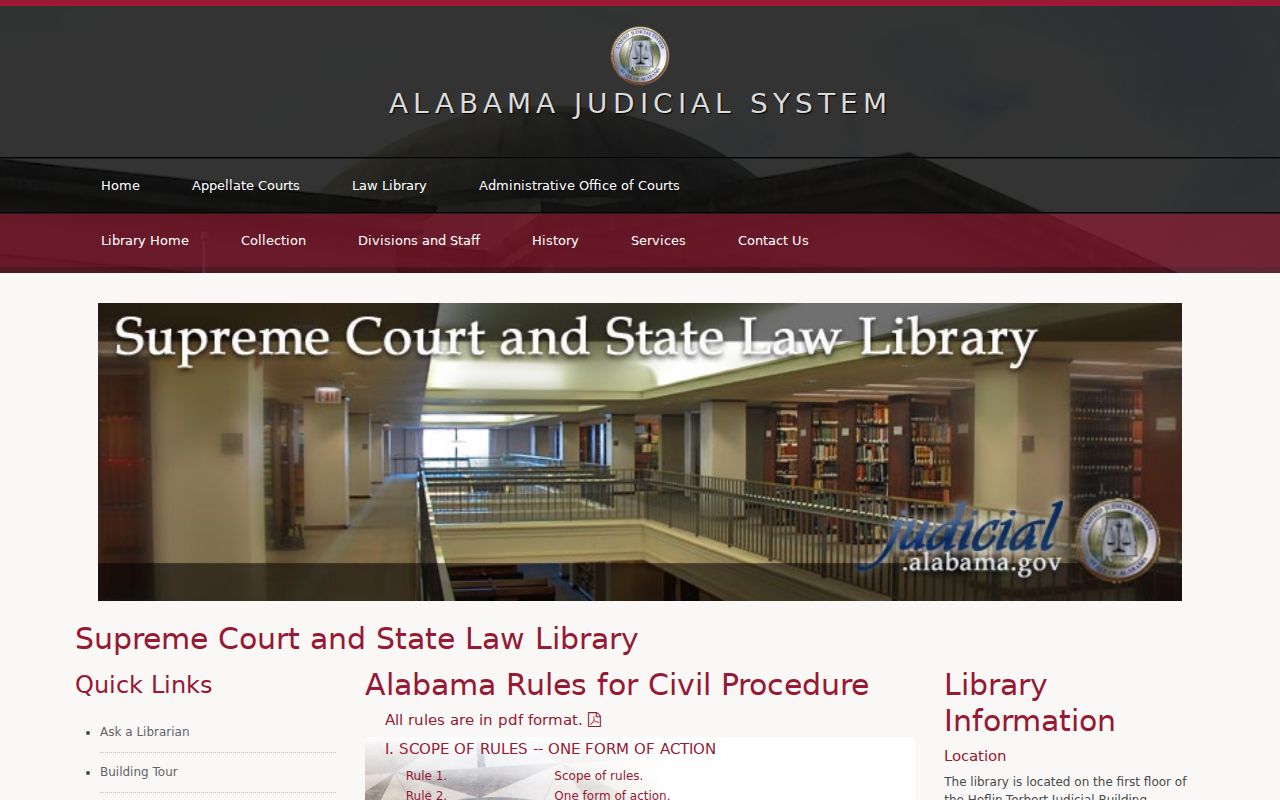
Those rules explain the role each filing plays. The local docket shows when that step happened in one case.
Types of Civil Cases on the Docket
Jefferson County civil dockets span several paths. General civil claims may involve contract, tort, or property disputes. District Court takes small claims and unlawful detainer. Circuit Court handles domestic relations, where public metadata can sit beside protected personal content. Probate cases run on petitions, notices, inventories, accountings, and orders at Probate Court, outside the Circuit Clerk's ordinary civil chain.
| Case type | Likely court | Key docket markers |
|---|---|---|
| General civil | Circuit Court | Complaint, service, motions, trial, judgment |
| Small claims | District Court | Claim, service, answer or default, hearing, judgment |
| Unlawful detainer | District Court | Complaint, service, setting, possession judgment, appeal if filed |
| Domestic relations | Circuit Court | Petition, temporary and final orders, with protected material restricted |
| Estate | Probate Court | Petition, notices, inventory, accounting, probate orders |
A filing-fee tier is not a jurisdiction rule. Current statutes and the clerk fix placement, so if an appeal opened a new file, keep both case numbers.
Jefferson Small Claims Use District Court
Begin any small-claims or eviction search with Jefferson County District Court, not Circuit Court. Skipping this step causes blank results. It also produces wrong-counter requests that waste a trip. The Birmingham and Bessemer division split applies here too. The District civil judges roster names the judges serving that lower civil level.
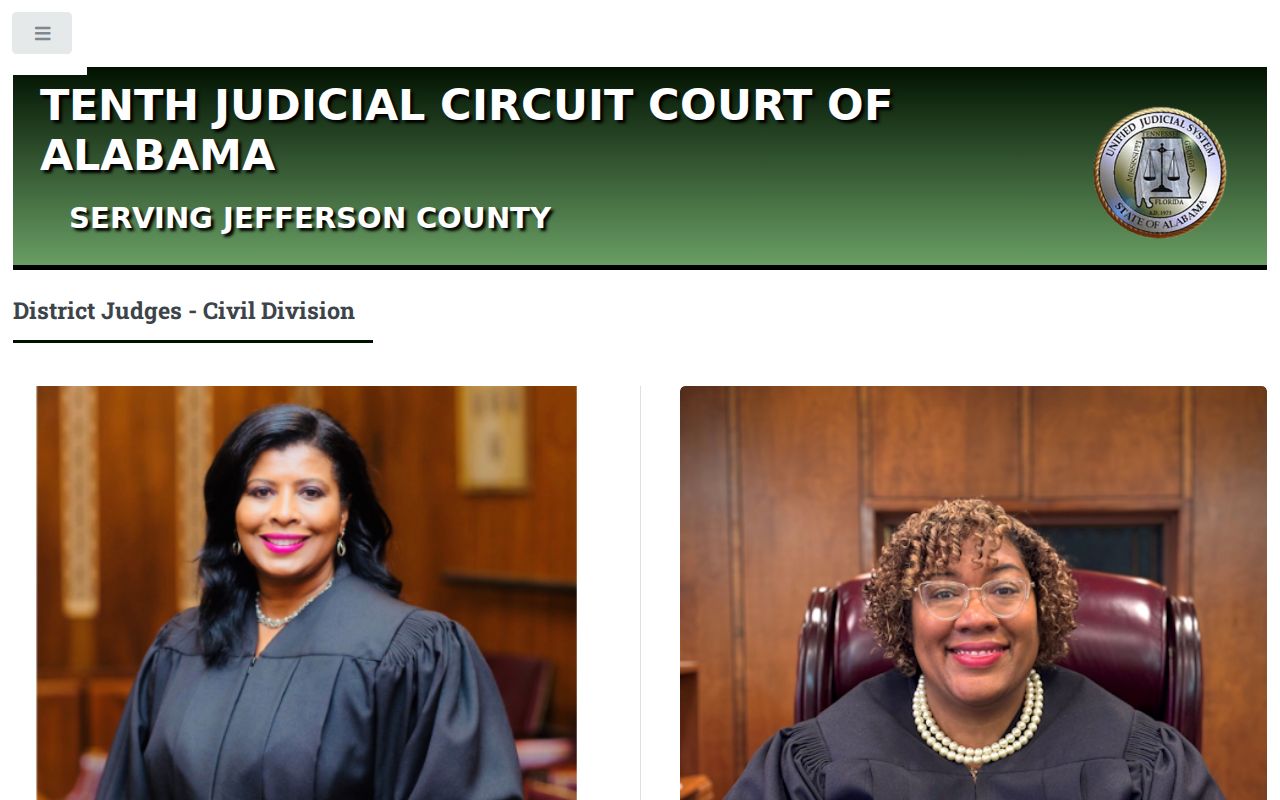
The roster helps with court identity and contacts. It cannot replace the chronology, direct setting notice, or a clerk-certified record. A trial de novo may be permitted on appeal. Under Alabama law, a District judgment may spawn a new Circuit Court docket. The District file remains the originating record. Treat neither number as a duplicate, and do not assume the first file vanished.
Settings and Hearings on Civil Dockets
What can a Jefferson County civil docket tell you about scheduling? Entries may cover scheduling orders, conferences, motion hearings, trial dates, and continuances. One caution matters here. A filed notice proves a setting was scheduled, not that it happened. A motion to continue is just a request. The date only changes when the judge signs an order or the court sends a new notice. Older dates stay in the chronology because they document the case's history.
Birmingham Circuit and District settings appear in Find My Courtroom. Look for the date, time, judge, location, and courtroom. That official page warns information changes, and the judge's own documentation controls if sources conflict. Is a row missing, or do two listings disagree? Call the assigned judge's office or the court coordinator. The clerk keeps the filed record. The coordinator manages the judge's calendar.
Recheck any Jefferson County civil setting close to the hearing date. Do this above all after a motion, emergency, continuance request, or trial-calendar change.
Jefferson Civil Docket After Judgment
The final judgment is rarely the final entry. A Jefferson County civil docket may continue with motions to alter or amend, appeals, execution, garnishment, satisfaction, or judgment-lien steps. Some labels carry precise meanings. A "default judgment" means relief was entered after a properly served party failed to respond or defend as required. "Dismissed" ends a claim. The order should say whether it was with or without prejudice. A nonsuit or voluntary dismissal records the initiating party's own act under the applicable rule.
- Consent judgment
- An agreed court judgment resolving the matter on stated terms.
- Transferred
- The file or issue moved to another court or case number.
- Consolidated
- Related actions proceed under a lead case while retaining their history.
- Satisfaction
- A later record that the judgment obligation has been met as documented.
Want the actual signed judgment? Note its docket date and title, then ask the correct clerk for the image, a plain copy, or a $5 certification on top of copy charges. Keep in mind that a browser printout is not a clerk-certified record.
Public Access to Civil Dockets
Alabama Rule of Judicial Administration 30 guarantees free inspection of open Jefferson County civil court docket files. That right applies at the correct clerk's office. Charges can apply to remote service, clerk research, paper copies, certification, and archive retrieval. The Birmingham counter sits at 716 Richard Arrington Jr. Boulevard North, reachable at 205-325-5355. Bessemer's counter is at 1851 Second Avenue North, 205-497-8510. Both official pages list weekday hours of 8:00 a.m. to 5:00 p.m. Knowing which division holds your case saves a trip.
Public access has limits. The court-record inspection rule, electronic court-data rule, and privacy and confidentiality rules preserve access to open records while protecting sealed files and confidential information.
In domestic-relations cases, metadata can be open even where exhibits or personal information stay protected. Paying a fee never overrides a seal or confidentiality rule. If an image is missing, ask the clerk about the proper authorization process instead of assuming it should be released.
Jefferson Civil Copies and Searches
Jefferson County publishes the Circuit Clerk's fee schedule for copies and searches. Plain copies run $5 for the first 20 pages. Then it is $0.50 per added page. Certification adds $5. Search fees climb from there: $10 for a computerized clerk search, $20 for a paper search, and $25 for an archived or microfilmed search. Free inspection is often the smart first move. It works well if you can visit and already know the court and division.
A written request should spell out your contact details. Include Birmingham or Bessemer, the court, case number, and style if known. Add the exact document title and date, plain or certified status, delivery choice, and payment contact. The Circuit Clerk offers no dedicated web form for copy requests. Mail-payment instructions are incomplete. Call before sending any funds.
For records outside the ordinary court file, Alabama sets out its official public-record request procedure in the state code.
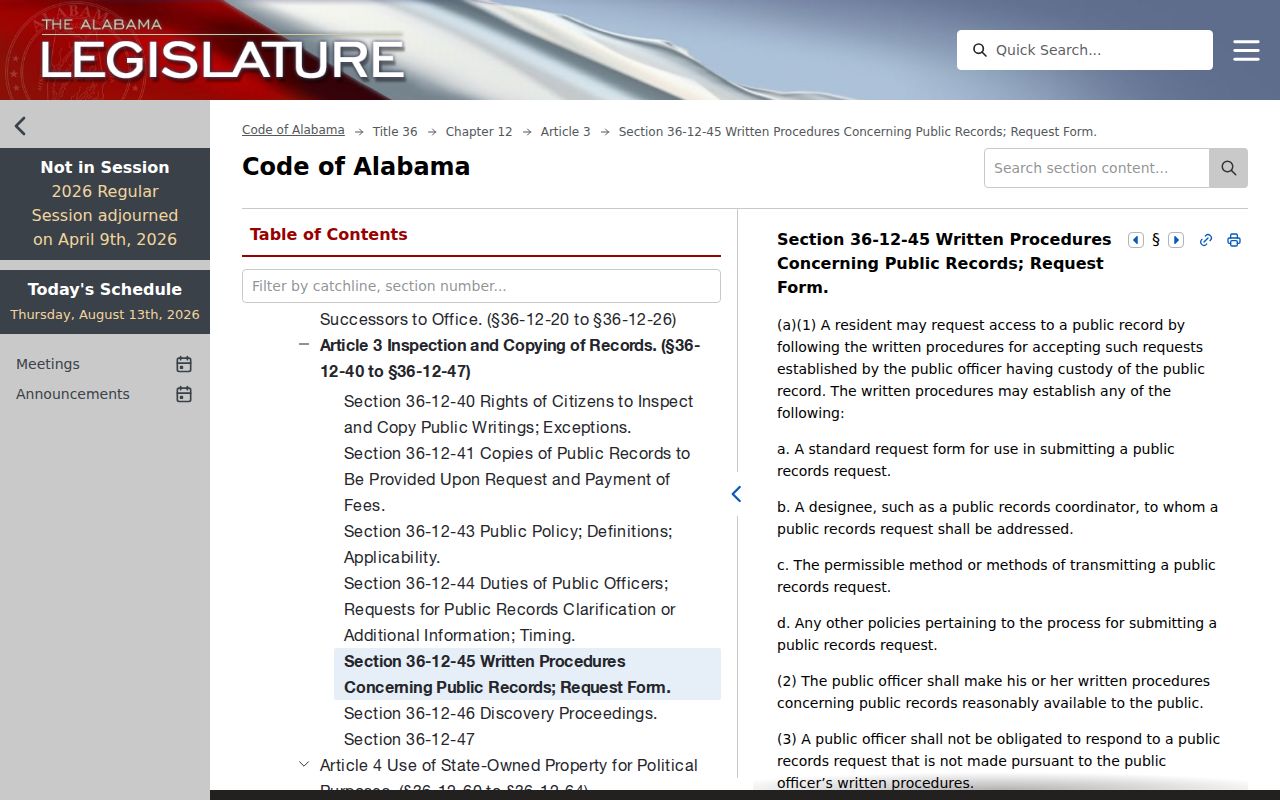
That statutory process has its place, but ordinary trial-court files should still go straight to the clerk holding the Jefferson County civil docket. Missing the case number? The county case search page explains the name and number routes to try before you prepare a copy request.